
Vanilla Cake Recipe (Moist, Fluffy & Easy)
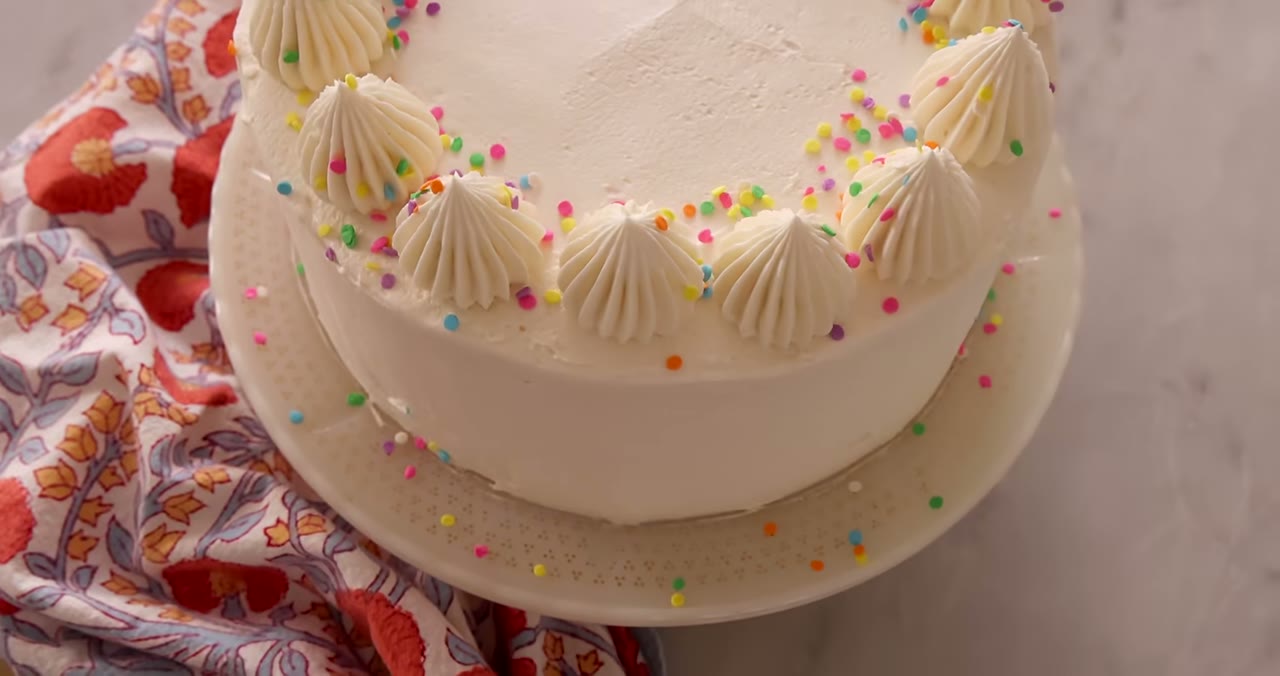
Vanilla cake sounds plain until you taste a good one. A great one is buttery, tender and fragrant, with a crumb so soft it almost melts; a bad one is dry and forgettable. The difference is buttermilk, room-temperature ingredients, and not overmixing the batter.
This is the classic two-layer vanilla cake: soft, pale-gold layers under a cloud of vanilla buttercream, finished with piped dollops and sprinkles. For a chocolate version, see our chocolate cake recipe.
Prep 20 min · Cook 30 min · Total 50 min · Serves 12 — Two soft layers under fluffy buttercream.
Why This Vanilla Cake Stays Moist for Days
The secret is buttermilk: its lactic acid weakens the gluten so the crumb stays tender, and its fat keeps the cake moist for days.
Creaming does the rest: beating butter with sugar whips in air, and that air makes the cake rise light and fluffy. Once the flour goes in, mix only until the batter almost comes together — overmixing develops gluten, and gluten turns a fluffy cake dense.
What You Need for Vanilla Cake
For the cake:
- 2 1/2 cups all-purpose flour (300g)
- 2 1/4 tsp baking powder
- 3/4 tsp salt
- 1 2/3 cups granulated sugar (333g)
- 3/4 cup unsalted butter, softened (170g)
- 3 large eggs, room temperature
- 1 tbsp vanilla extract
- 1 cup whole or low-fat buttermilk, room temperature (240mL)
For the buttercream:
- 1 1/2 cups unsalted butter, softened (340g)
- 1/4 tsp salt
- 5 cups powdered sugar (600g)
- 1/4 cup heavy cream or whole milk (60mL), plus more as needed
- 2 tsp vanilla extract
- Sprinkles, for decorating (optional)
How to Make Vanilla Cake
- Prep: Preheat the oven to 350°F. Grease two 8-inch round cake pans and line the bottoms with parchment paper.
- Dry ingredients: Sift the flour, baking powder and salt in a medium bowl and set aside.
- Cream: Beat the butter on medium until smooth, add the sugar and beat on high for 2 to 3 minutes, until pale and fluffy, scraping the bowl down as needed.
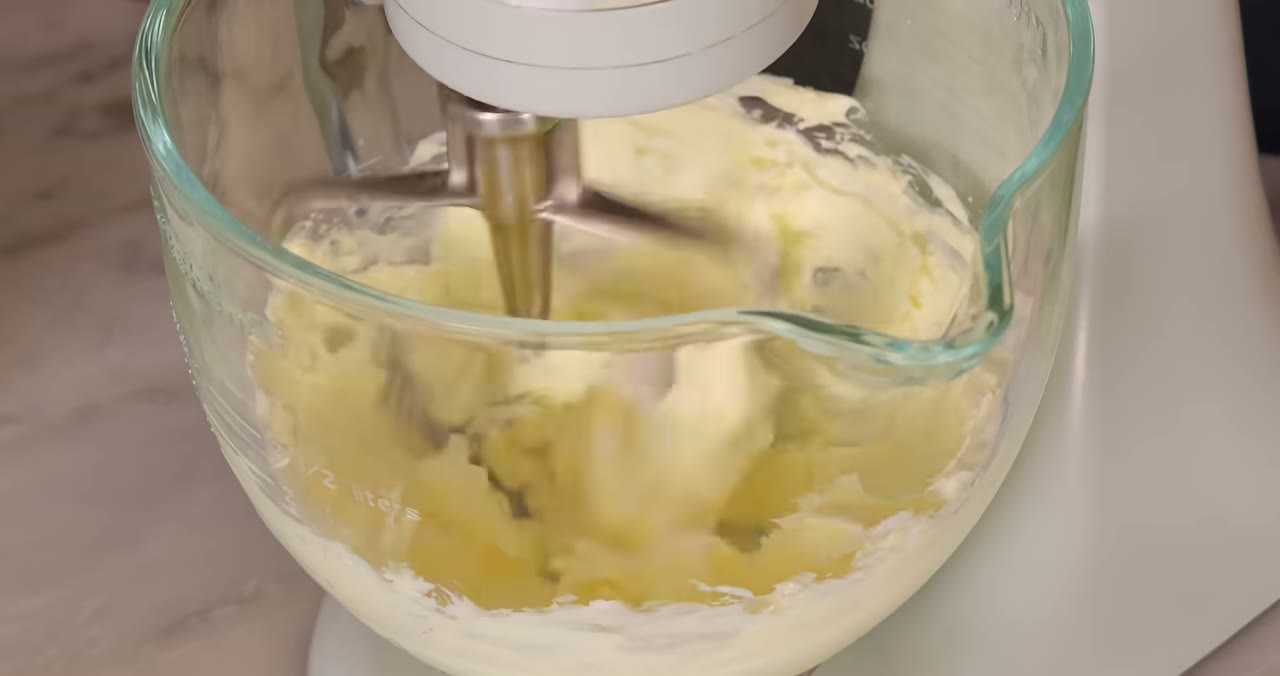
- Eggs and vanilla: Add the eggs one at a time, scraping down the bowl between each one. Add the vanilla and mix on high for about a minute.
- Flour and buttermilk: On low, add the flour in three batches, alternating with the buttermilk. As soon as it is almost combined, stop the mixer and fold in the rest by hand. Do not overmix.
- Bake: Divide the batter between the pans and bake about 30 minutes, until the edges pull away and a toothpick comes out clean.
- Cool: Cool the layers in the pans for 10 minutes, then turn them out, peel off the paper, and cool completely. Warm layers melt frosting.
- Buttercream: Beat the butter and salt on medium-high for about 5 minutes, until light and fluffy. On low, add the sugar a cup at a time, with a tablespoon of cream between additions. Add the vanilla and beat on high for about a minute.
- Frost: Spread a cup of frosting over the first layer, add the second, and cover the top and sides. Pipe dollops around the edge and scatter sprinkles.
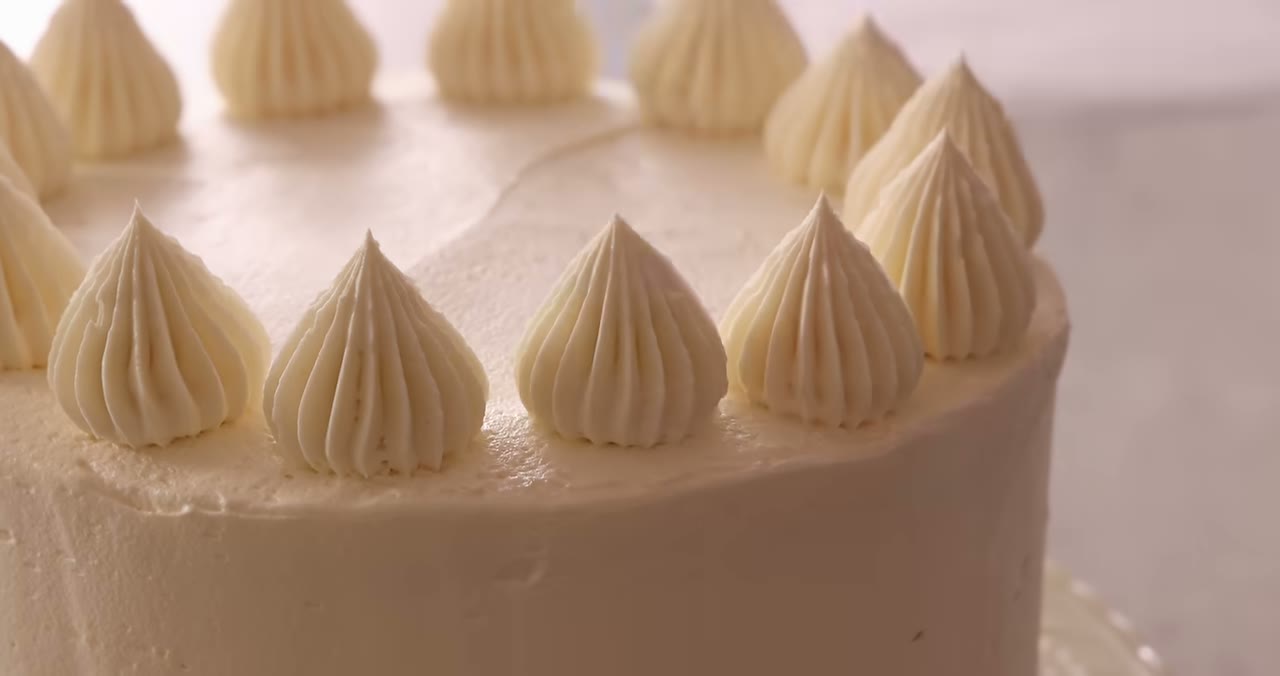
Watch it being made here:
Mistakes That Keep Vanilla Cake From Being Great
Cold ingredients. Cold butter will not cream and cold eggs can curdle the batter, so set everything out an hour ahead.
Scooping the flour. A scooped cup packs in too much flour, the main reason cakes turn out dry. Spoon it in and level it off, or weigh it: 300g.
Overmixing after the flour goes in. Once flour meets liquid, gluten forms. Mix only until the batter almost comes together, then fold the rest in by hand.
Frosting a warm cake. Even slightly warm layers melt buttercream into a sliding mess. Wait until the layers are fully cool.
Easy Swaps and Variations
No buttermilk? Stir a tablespoon of lemon juice or white vinegar into a cup of whole milk and let it sit 10 minutes. For cupcakes, fill lined cups two-thirds full and bake 18 to 22 minutes; this makes about 18. Swap 2 tablespoons of butter for vegetable oil if baking ahead — it keeps the layers soft longer.
Storing, Making Ahead and Reheating
Covered tightly, the frosted cake keeps in the fridge for 4 to 5 days. Bring slices to room temperature before serving. Unfrosted layers freeze for up to 3 months, wrapped in plastic wrap and foil; thaw overnight in the fridge.
What to Serve With Vanilla Cake
Vanilla cake needs almost nothing: tea, coffee, or a scoop of vanilla ice cream. Fresh berries cut the sweetness beautifully. If you are building a dessert table, our pecan pie recipe sits next to it nicely, its nutty caramel filling a warm contrast to the pale, buttery cake.
Your Vanilla Cake Questions, Answered
Can I make this vanilla cake ahead of time? Yes — bake the layers up to two days ahead, wrapped, or freeze them up to three months. Frost on the day you serve it.
Why did my vanilla cake turn out dense? Almost always overmixing after the flour went in, or too much flour. Spoon it in, level it, and stop mixing as soon as the batter comes together.
Can I use salted butter? Yes, but cut the salt in the batter to 1/4 teaspoon and leave it out of the frosting.
What is the difference between vanilla cake and white cake? White cake uses only egg whites, so it stays pale and firmer. Vanilla cake uses whole eggs, which make it softer and more tender, with a light golden crumb.
Make it once and the box mix stays in the cupboard — soft, buttery, properly vanilla.
Vanilla Cake Recipe (Moist, Fluffy & Easy)
Ingredients
Method
- Preheat the oven to 350°F. Butter and flour two 8-inch round cake pans, or grease them with baking spray, and line the bottoms with parchment paper.
- In a medium bowl, sift or whisk together the flour, baking powder and salt and set aside.
- In the bowl of a stand mixer fitted with the whisk attachment, beat the butter on medium speed until smooth. Add the sugar and beat on high for 2 to 3 minutes, until light and fluffy, scraping the bowl down as needed.
- Reduce the speed to medium and add the eggs one at a time, scraping down the bowl between each. Add the vanilla and mix on high until combined, about 1 minute.
- Reduce the speed to low and add the flour in three batches, alternating with the buttermilk. Once almost combined, stop the mixer and fold in any remaining flour by hand using a spatula. Do not overmix.
- Divide the batter equally between the pans and bake for about 30 minutes, until the edges pull away from the sides and a toothpick inserted in the centre comes out clean.
- Cool the layers in the pans for about 10 minutes, then invert onto a cooling rack, remove the paper and cool completely.
- In a stand mixer, beat the butter and salt on medium-high speed until light and fluffy, about 5 minutes. Reduce to low and gradually add the sugar one cup at a time, adding a tablespoon of the cream between each addition. Add the vanilla and beat on high for about 1 minute.
- Spread about 1 cup of frosting over the first layer, add the second layer, and cover the top and sides in buttercream. Pipe dollops around the edge and scatter sprinkles if you like.
One Comment