Ingredients
Method
- Bring a small pot of water to a boil. Drop the basil leaves in for 5 seconds, then lift them out with a slotted spoon and plunge them straight into ice-cold water. Drain through a strainer and squeeze out as much water as you can.
- Preheat the oven to 300°F. Spread the pine nuts on a baking sheet lined with parchment paper and toast for about 6 minutes, until light golden brown. Cool completely.
- Crush the garlic with the back of a knife or a garlic press and put it in a food processor or blender, along with the blanched basil, toasted pine nuts and parmesan cheese.
- Pulse about 4 times, until everything is finely chopped but not yet a paste. Scrape the sides down once.
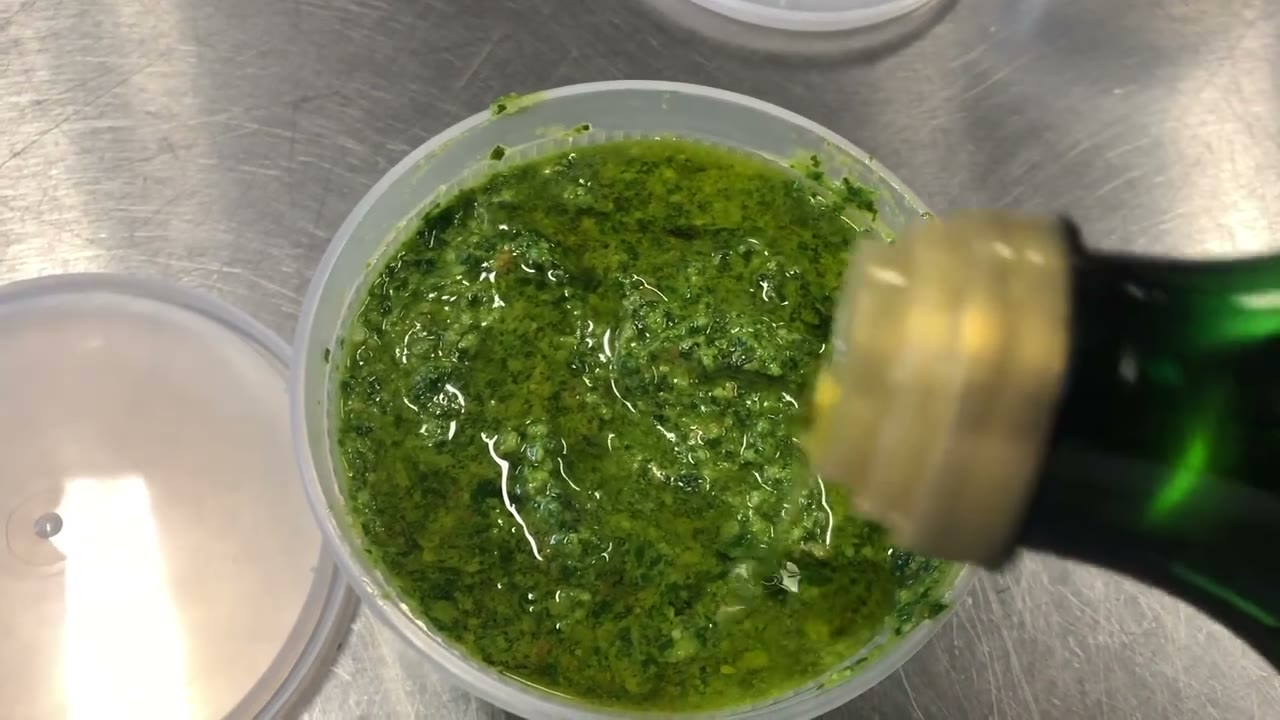
- With the processor running, drizzle in all the olive oil in a slow, steady stream until the pesto comes together.
- Taste and season with salt and pepper. Stir in the lemon juice if you like a brighter edge. Spoon into a jar, press a thin layer of olive oil over the top, and seal.
Notes
Blanching the basil for 5 seconds keeps the pesto bright green for days instead of turning brown.
Pulse, do not over-blend — pesto should have texture, not be a smooth paste.
Watch the pine nuts closely while toasting: they go from golden to burnt in under a minute.
Store with a thin layer of olive oil over the surface to stop the top darkening.
Never heat pesto in a pan — warm it only with the heat of freshly cooked pasta.
Freezes well for up to 3 months in ice cube trays for single servings.